The Ultimate Guide to Fertility Testing and IVF Treatment
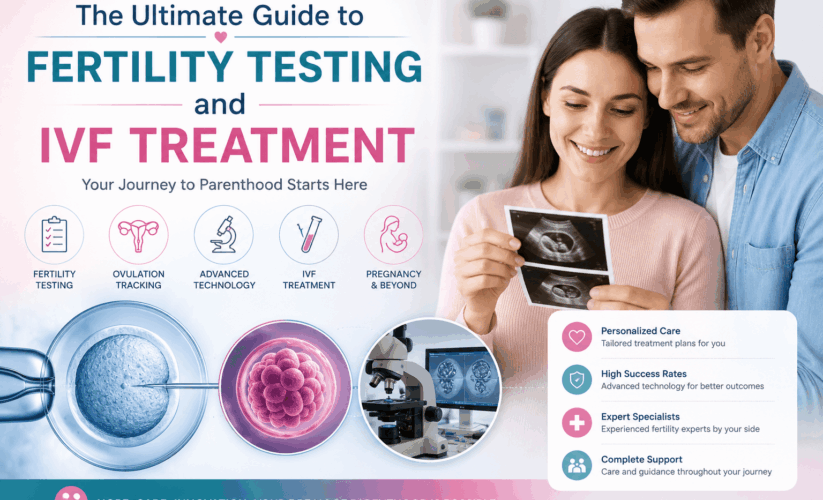
Recent strides in reproductive science have changed how we look at family planning. These steps allow thousands of people to move past difficult biological barriers. Clear, evidence-based details help you make sense of your reproductive options, which is why we present The Ultimate Guide to Fertility Testing and IVF Treatment.
This complete guide walks you through each stage of clinical testing and assisted reproduction to assist your decision-making. This resource serves as The Ultimate Guide to Fertility Testing and IVF Treatment by breaking down complex clinical methods into direct, easy-to-use advice.
Understanding Your Body: The Ultimate Guide to Fertility Testing and IVF Treatment
Fertility checks usually start after twelve months of regular, unprotected intercourse if you are under thirty-five. If you are older than thirty-five, clinical guidelines suggest beginning assessments after six months. Specialists track various biological markers to spot hidden barriers to conceiving.
Ovarian reserve tests check the remaining egg supply with blood work and pelvic ultrasounds. Antral follicle counts and Anti-Mullerian Hormone levels offer vital data about ovarian health. Semen analysis tests sperm count, movement, and shape to check male factor fertility.
Low ovarian reserve signs require custom timelines to ensure the best results. Spotting issues early lets doctors tailor stimulation schedules. This forward-acting care stops delays and makes the clinic run much better.
Essential Diagnostics: The Ultimate Guide to Fertility Testing and IVF Treatment
Imaging tools play a key role in finding physical changes in your reproductive system. A hysterosalpingogram uses specialized X-ray technology to check for blockages in the tubes. This test also lets doctors inspect the shape of the uterine cavity.
Ultrasounds offer detailed pictures of the uterus, ovaries, and nearby pelvic tissues. Specialists use these scans to spot fibroids, polyps, or ovarian cysts that could block embryo attachment. Hormonal assays track thyroid function, prolactin, and gonadotropins to ensure a balanced hormone system.
Clinical teams rely on these assessments to build a complete biological picture. Finding barriers early avoids wasted cycles and cuts down on physical strain. Every test adds a vital piece to the fertility puzzle.
| Diagnostic Test | Purpose | Key Biomarkers / Indicators |
|---|---|---|
| Ovarian Reserve Testing | Measures remaining egg supply | AMH levels, Antral Follicle Count (AFC) |
| Semen Analysis | Checks male factor fertility | Sperm count, motility, morphology |
| Hysterosalpingogram (HSG) | Checks fallopian tubes and uterine cavity | Tubal patency, structural anomalies |
| Hormonal Assays | Tracks endocrine balance | FSH, thyroid function, prolactin |
- Hormone panels measure follicle-stimulating hormone on day three of the menstrual cycle.
- Saline infusion sonography provides clear, high-resolution views of the endometrial lining.
- Genetic screening spots inherited conditions before starting treatment.
Clinical Protocols: The Ultimate Guide to Fertility Testing and IVF Treatment
In vitro fertilization begins with medical stimulation to grow several mature eggs. You will self-administer daily hormone injections over eight to twelve days. Medical teams monitor follicle growth closely through regular ultrasounds and blood tests.
Once follicles reach their ideal size, a trigger shot is given to help with final egg maturity. Egg retrieval happens exactly thirty-six hours after this injection under light sedation. Embryologists then combine the retrieved eggs with prepared sperm in a specialized lab.
The resulting embryos grow in a controlled incubator for three to six days. Special fluids provide the nutrients needed for cell division and growth. Clinicians judge embryo health based on grading systems that check cell symmetry and development.
- Intracytoplasmic sperm injection involves placing a single healthy sperm directly into a mature egg.
- Preimplantation genetic testing checks embryos for chromosomal issues before transfer.
- Embryo freezing allows you to store high-quality embryos for later transfer cycles.
Maximizing Success: The Ultimate Guide to Fertility Testing and IVF Treatment
Success rates vary widely based on maternal age, medical diagnosis, and lifestyle choices. According to clinical data, women under thirty-five see the highest rates of live births per embryo transfer. Medical choices must match your unique diagnostic data to yield the best results.
Preparing the uterine lining for transfer requires exact doses of estrogen and progesterone. This hormone balance ensures the endometrium is ready to receive the embryo. You can gain from lifestyle shifts like balanced nutrition, moderate movement, and stress relief habits.
Frozen embryo transfers show similar or sometimes higher success rates than fresh transfers for some patients. This route lets the body recover from intense stimulation hormones. Custom scheduling increases the chances of successful attachment.
- Endometrial receptivity tests pinpoint the best window for embryo attachment.
- Single embryo transfer rules reduce the risks of having multiple babies at once.
- Acupuncture and nutrition support physical readiness during active treatment cycles.
Emotional Wellness, Financial Planning, and Next Steps: The Ultimate Guide to Fertility Testing and IVF Treatment
Going through fertility treatments demands deep emotional and financial commitments. Couples and individuals often gain from joining support networks or talking with specialist fertility therapists. Direct talks with financial staff help clarify insurance coverage and out-of-pocket costs.
Patients using The Ultimate Guide to Fertility Testing and IVF Treatment can navigate these complex financial structures with more confidence. Many clinics offer multi-cycle packages or refund programs to ease your mind. Knowing the complete cost breakdown of medications, lab fees, and anesthesia stops unexpected bills.
Your emotional state directly affects your ability to complete multiple treatment cycles. Adding mindfulness practices or professional counseling lowers the mental burden of clinical care. Building a dedicated support network of friends and family remains a vital part of this path.
Starting a reproductive health path requires careful preparation, expert guidance, and emotional strength. This guide outlines the essential diagnostic tests, clinical stages, and supportive methods needed for success. Using The Ultimate Guide to Fertility Testing and IVF Treatment ensures that you stay informed and ready at every step on your road to parenthood.
Combining modern diagnostic tools with custom laboratory methods continues to raise success rates worldwide. Patient education remains the single most powerful tool for navigating assisted reproduction. Close cooperation with experienced clinical teams turns these complex medical steps into manageable milestones.
- Focus on early diagnostic tests to find specific biological barriers.
- Discuss custom ovarian stimulation plans with a reproductive specialist.
- Set up a strong support system to handle the emotional demands of clinical care.